
INTERNATIONAL DEVELOPMENT
APDA was granted Special Consultative Status with the Economic
&
Social Council of the United Nations in 2007 for its work in the Disability Field
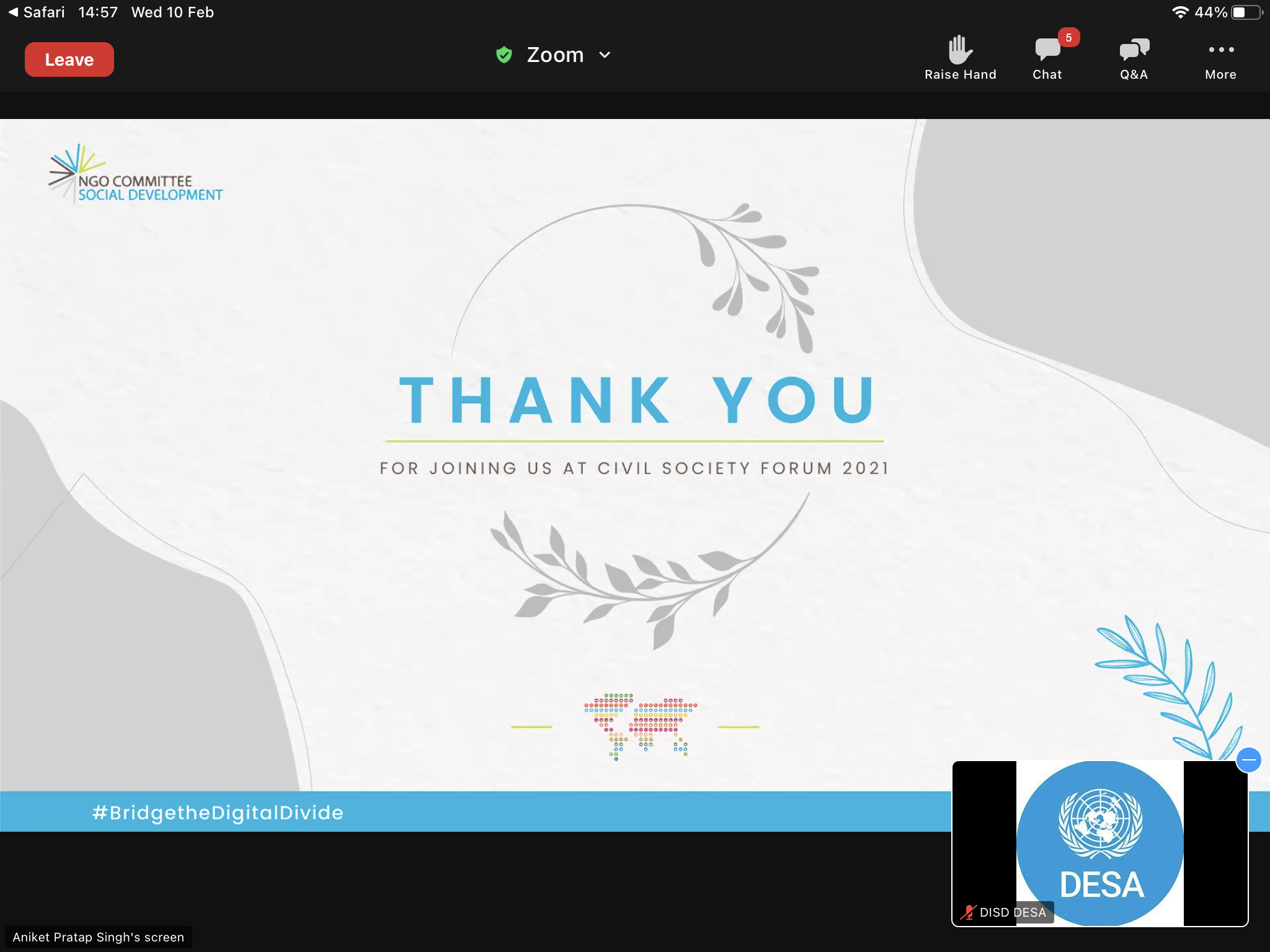
UN CIVIL SOCIETY FORUM 2021 - THE 59TH COMMISSION FOR SOCIAL DEVELOPMENT - DIGITAL TECHNOLOGY
APDA attended and participated in 4 sessions spread over 4 days, on using digital technology for better social development. As a grassroots DDPO, addressing the needs of our BAME disabled users, we are aware of the many benefits disabled people can find in the advancement of modern technologies.
There are now some admirable items of technology that help disabled people to make their everyday life much easier. There are so many different Apps offering something of benefit for every disabled person, and with assisted technology, many disabled people have become contributing members and are able to participate in the various spheres of society. However, we are also aware of the vulnerabilities of disabled people in the world of modern digital technology.
During this Covid-19 Pandemic lockdowns, digital technology has proved to be very helpful, and also making it possible for people in many countries to function from home. However, this is something not possible in poorer countries with hardly any easily accessible digital facilities.
The UN's Sustainable Development Goals (SDGs) initiative have the potential to offer enormous beneficial changes in the lives of poor people and improve their position in life. However, these proposed transformational changes will also carry with it, the risk factors for those new and excited participants who may not yet be fully aware of all the possible associated risks.
APDA's representatives spoke to the Panel first about the still persistent barriers faced by disabled people in their attempts to be included and not to be left behind in society. We also made an earnest request for the Panel members to ensure safety and security for disabled people, particularly vulnerable disabled women, who may want to participate in this exciting UN initiative.


Development Work in India
Apart from some ‘ad hoc’ emergency relief and welfare activities abroad, APDA first began its dedicated overseas development activities in New Delhi.
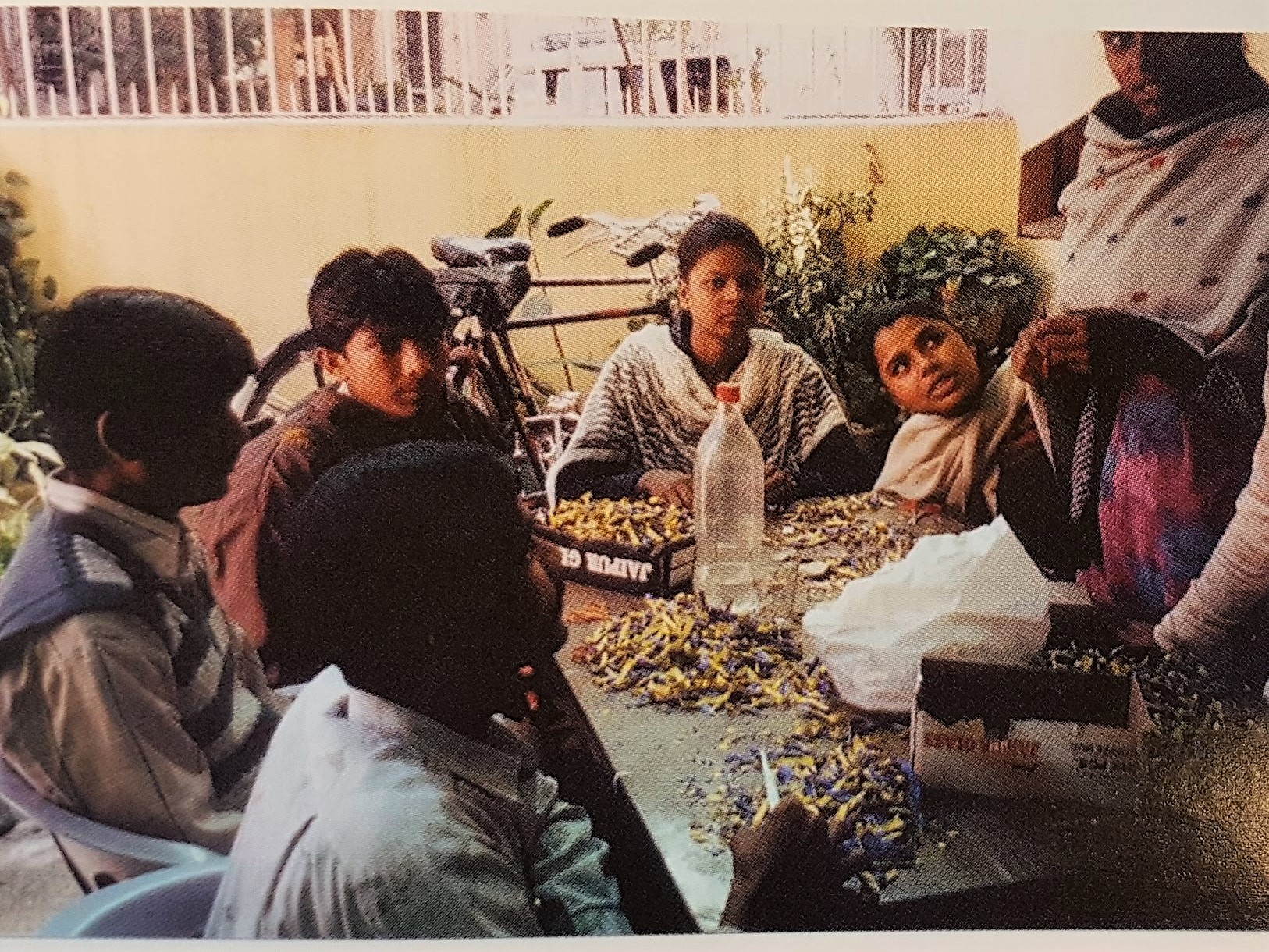
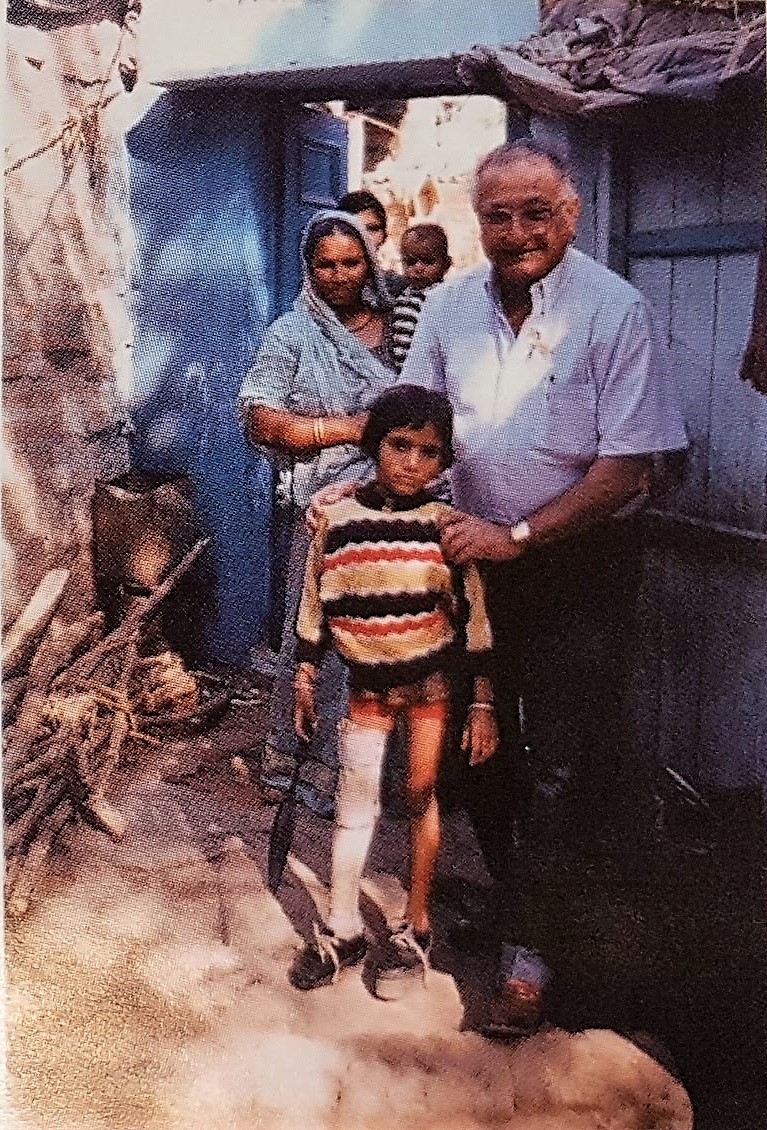
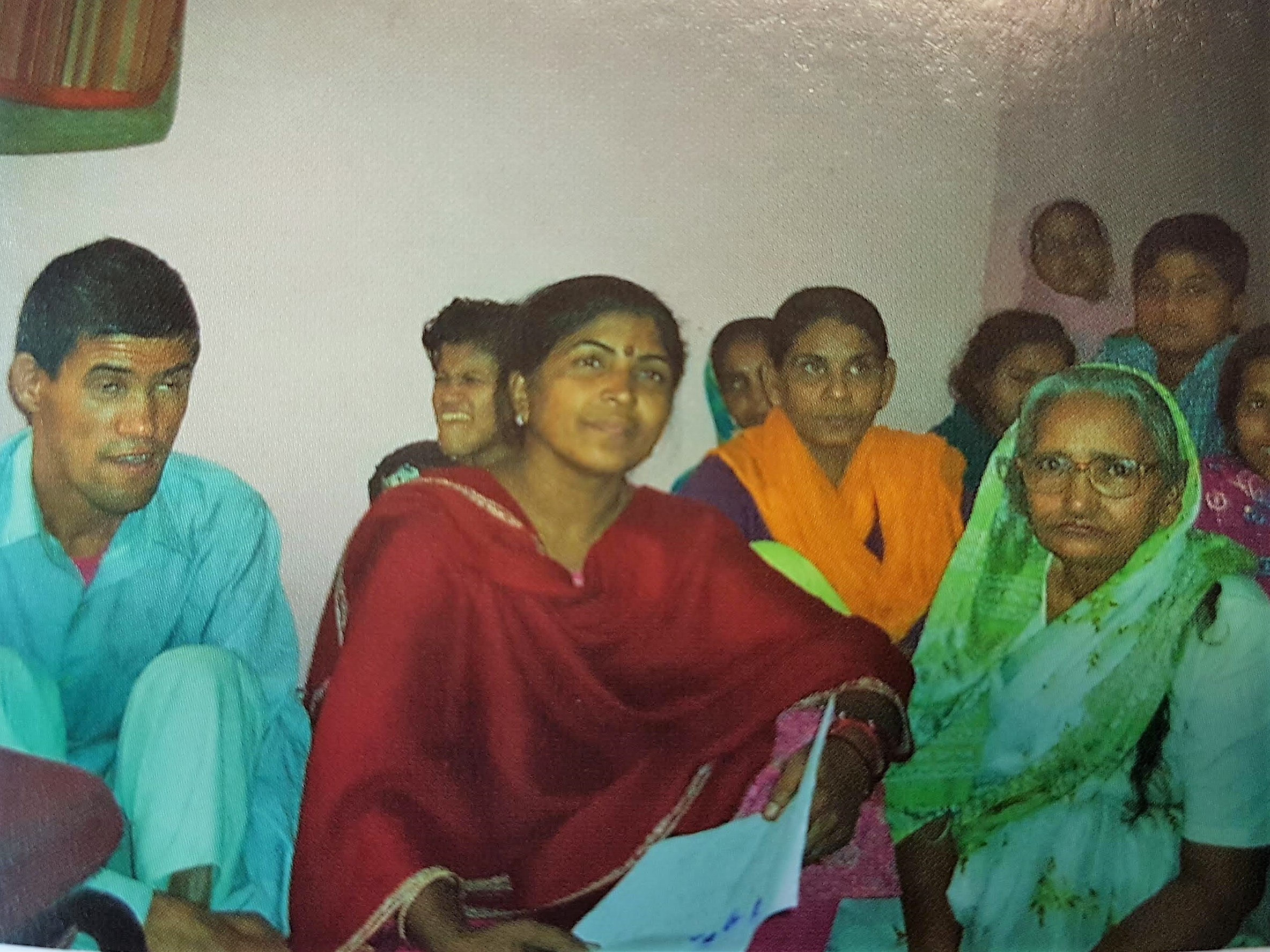
Apart from some ‘ad hoc’ emergency relief and welfare activities abroad, APDA first began its dedicated overseas development activities in New Delhi, in India in collaboration with the local NGO ‘Concerned Action Now’ (CAN), addressing the social and economic development of disabled people in the slum areas of New Delhi.
We also supported our partner local NGO in Delhi to carry out vocational skills training and livelihood support through their centres and contributed towards the pre-primary school for disabled children. This was to assist them in getting admittance into special needs and integrated mainstream schools.
CAN managed to establish track record at its two Vocational and livelihood skills training centres of producing interesting items by disabled trainees for the Corporate Gift market and of participating in competitive bidding for contracts to provide stationery items for conferences, seminars and other similar events.
People with physical, sensory and learning difficulties were trained in production skills and they then participated in producing items for sale through corporate orders, stalls at events and other outlets. Their products were also marketed through complementary networks in major cities including Mumbai. Some trainees also managed to set up income generating STD Telephones Booth enterprises.
CAN also organised workshops and street plays and shows to bring awareness about ‘Disability and Child Rights’ with participation from CAN’s younger members with disabilities. They also succeeded in securing assistive equipment and devices for their disabled Users.

Development Work in Bangladesh 2018
In June 2018 APDA went on a scoping trip to Bangladesh, to explore existing service provisions for people with Disabilities.
In June 2018 APDA went on a scoping trip to Bangladesh, to;
To explore existing service provisions for people with Disabilities; Access, audit of services, grounds and buildings.
To ascertain the level of current users of the services, the number of government and non-government organisations working in the Disability sector in Bangladesh.
To collect disability related research materials from government and non-government organisations.

Development Work in Myanmar 2017
Joint CEO, Michael Jeewa hopes to encourage families to allow their members with disabilities to come out in the open and make them productive members of the society.
The UK-based Asian People’s Disability Alliance (APDA), a non-governmental group, expressed its enthusiasm to support and work with similar entities that need help in Myanmar.
APDA, which has a consultative status with the Social Economic Council of the United Nations, not only wants to provide financial assistance but also share skills to increase the productivity of disabled people in the country.
The group has been searching for potential partner organisations and disabled individuals in the country since September 2017 at the same time as helping them.
Michael Jeewa, co-founder and joint CEO of APDA, said many families in Myanmar hide from public view family members who have disabilities.
Michael hopes to encourage families to allow their members with disabilities to come out in the open and make them productive members of the society.
“Caring for the disabled for his/her whole life is not the correct answer for them,” he told The Myanmar Times. “I am of Myanmar origin; I want to support my countrymen with my experience and skills. That’s why I decided to choose Myanmar.
Michael also set up a Myanmar community organisation to address the mental and physical well-being of the Myanmar community in the UK.
He is also involved in overseas development, sharing his experience and knowledge with disabled people in South and Southeast Asia since 1999.
According to the 2014 Myanmar census, 4.6 percent of the country’s population, or roughly 2,368,300 people, live with a disability.
In Myanmar, disability is categorised into four classifications: physical disability, vision impairment, hearing impairment and intellectual disability.
Currently, APDA provides wheel-chairs, hearing aids and crutches to people who suffer stokes, deafness and crippling diseases. The group also provides skill training and equality training aimed at empowering the disabled.
APDA is also providing technology to help the disabled run their own local organisation named the Myanmar Peoples’ Disabilities Association (MPDA).
Daw Pan Ei Phyu, secretary of the association, said, “We raise funds ourselves. APDA teaches techniques to seek funding and to access technology to help the disabled.”
“We are still preparing to register the MPDA. Before we get registered, we stand as private organisation helping disabled and disability organizations,” she said. “We expect to open a day-care center and outreach education for the disabled.”
“The APDA is a user-led registered charity of Asian disabled people. Launched and active since 1988, APDA is a non-political, non-religious and nonprofit entity.
Michael said he hopes the government of Myanmar will ease its policy to allow international organisations like APDA to directly help disabled people.
Myanmar TImes 2018
https://www.mmtimes.com/news/uk-based-disabled-group-support-myanmar.html

Development Work in Sri Lanka 2015
APDA helped disabled people in the Puttalam District who were marginalised and received no services or support.
APDA helped disabled people in the Puttalam District who were marginalised and received no services or support.
It provided:
training
health and education sessions
and helps with job creation.
It did this through UK-based volunteers who were:
doctors
teachers
business people
and other professionals
This project was funded by DFID and VSO.